

Embedded in the PoWer project, Patrick Lott and his Catalytic Reactors team develop modern catalyst formulations to enable efficient emission control in hydrogen-powered engines for off-road commercial vehicles. Driven by the need to decarbonize off-road machinery that is difficult to electrify, the interdisciplinary project bridging academia and industry aims to deliver a concept for a full-scale prototype of a hydrogen-powered agricultural machine by mid-2027 and has recently been highlighted in the Research to Business portfolio of the Karlsruhe Institute of Technology (KIT). 11.03.2026
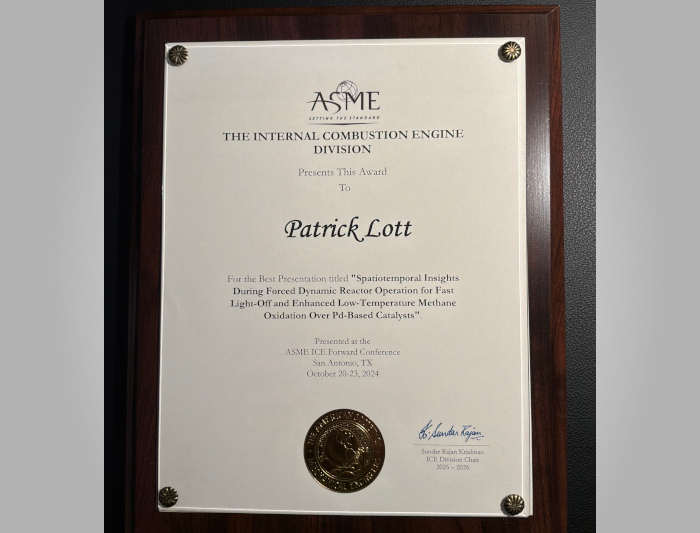
Patrick Lott, group leader at ITCP and CTO of the Center for Emission Control Karlsruhe, received the Best Presentation Award from the American Society of Mechanical Engineers (ASME), ICE Division, for his talk titled “Spatiotemporal Insights During Forced Dynamic Reactor Operation for Fast Light-Off and Enhanced Low-Temperature Methane Oxidation over Pd-Based Catalysts.” The award was presented during this year’s ICE Forward Conference, held in Milwaukee, WI, USA, from October 19–21. Congratulations to Patrick on this achievement! 27.10.2025
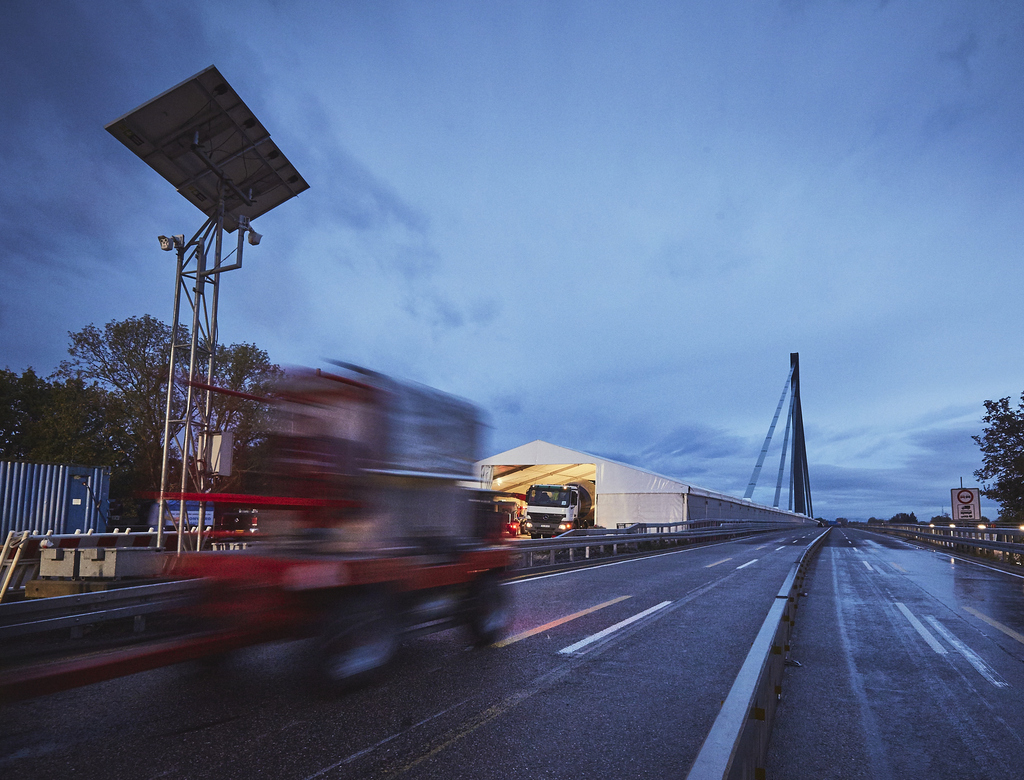
An interdisciplinary consortium of partners from industry and academia aims at developing robust hydrogen combustion engine applications that allow to decarbonize the off-road sector. We are happy to contribute to these efforts with the development of innovative catalysts for efficient emission control. November 2024.
more information
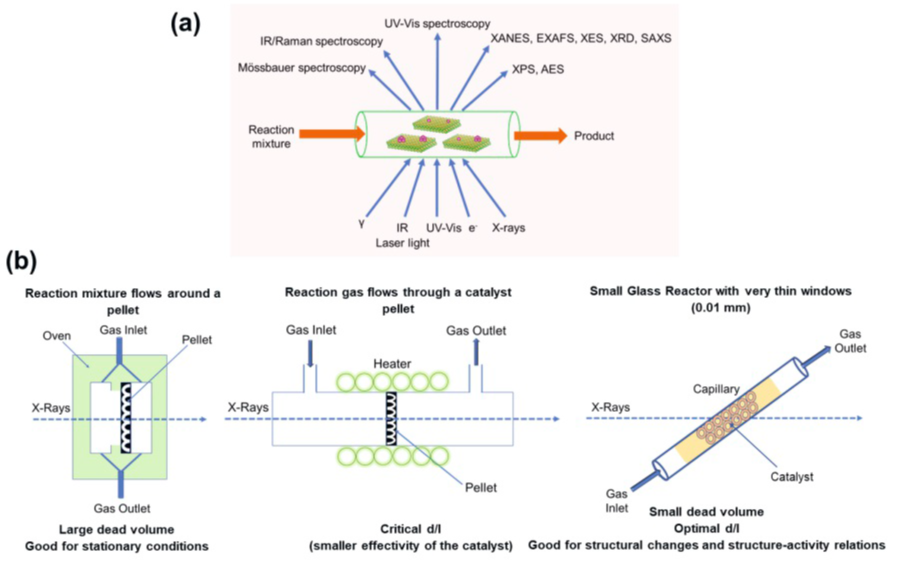
Bidyut Bikash Sarma and Jan-Dierk Grunwaldt show in their new publication in CHIMIA that for understanding the catalyst system under true reaction conditions, operando spectroscopy is the key to unravel small changes, which can ultimately lead to a significant difference in catalytic activity and selectivity. June 2024.
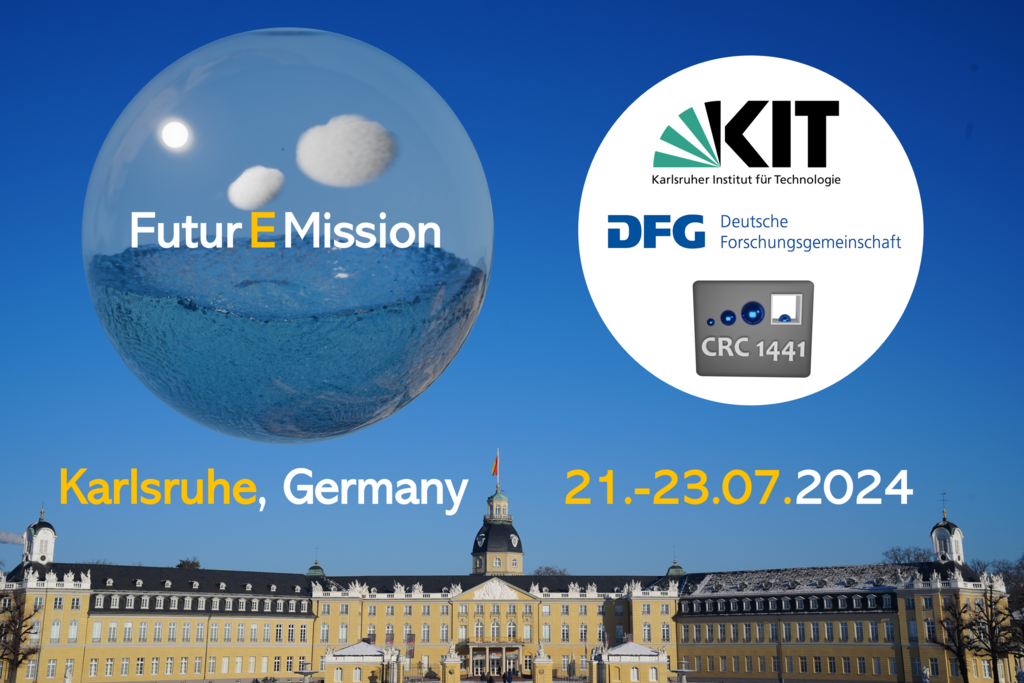
Emission control is recognized as a technology that is traditionally very important for clean air and will enable progress in other areas - most notably the energy transition, which is considered one of the most pressing issues of our time. In the 2-day conference we aim to bring together the international community in the field of emission control and to present and discuss new challenges, concepts and solutions in the scientific field. April 2023.
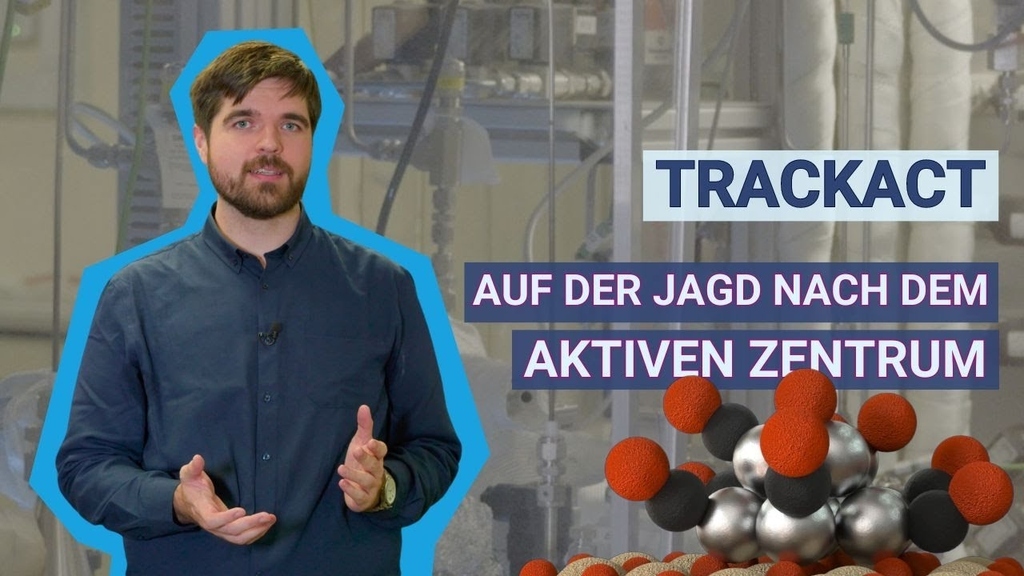
How do catalysts work and what do they look like during the reaction? These are the key questions for the development of efficient catalytic processes, the understanding of which is the ultimate goal of the interdisciplinary Collaborative Research Center (CRC) TrackAct. The CRC is presented in a video. March 2024.
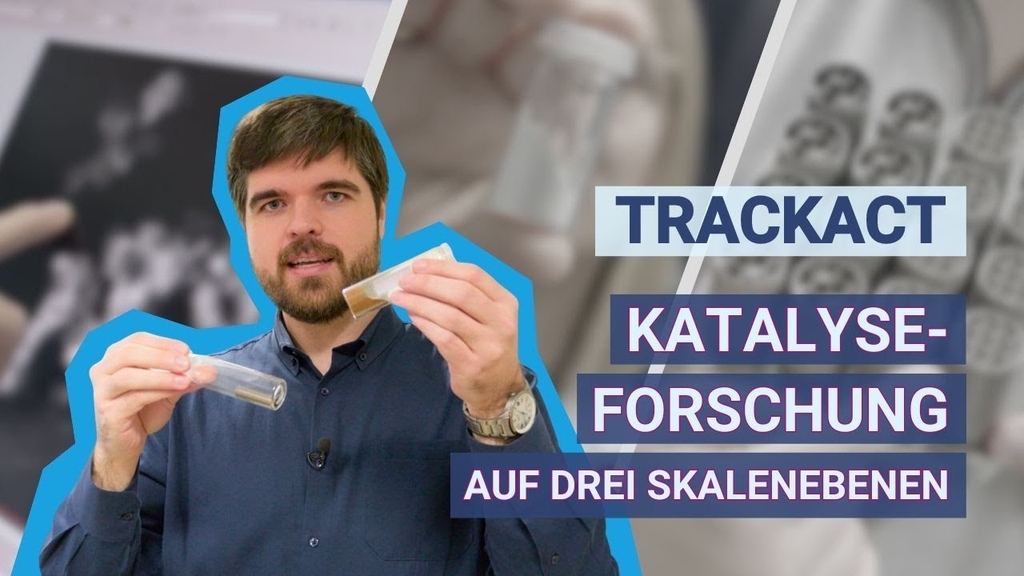
Numerous members of the Center for Emission Control Karlsruhe are engaged in the Collaborative Research Center TrackAct. Get to know the different departments in a video! Herein, scientists of different departments present their work - from catalysts in the microcosm to hand-sized, applied catalysts. March 2024.
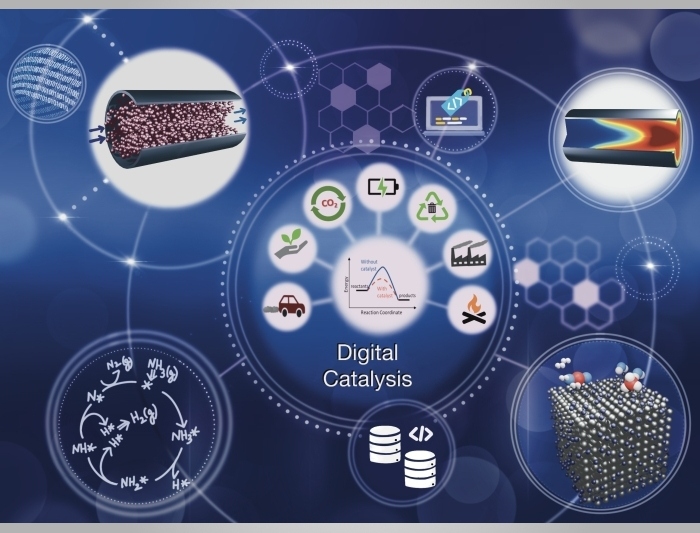
Rinu Chacko et al. published an invited concept paper on Interconnected Digital Solutions to Accelerate Modeling of the Reaction Kinetics in Catalysis in ChemCatChem. The article highlights tools for efficient storage of research
data, establishment of automated workflows, algorithms for advanced model development for catalytic reaction systems such as Adacta, CaRMeN, DETCHEM, RMG. March 2024.
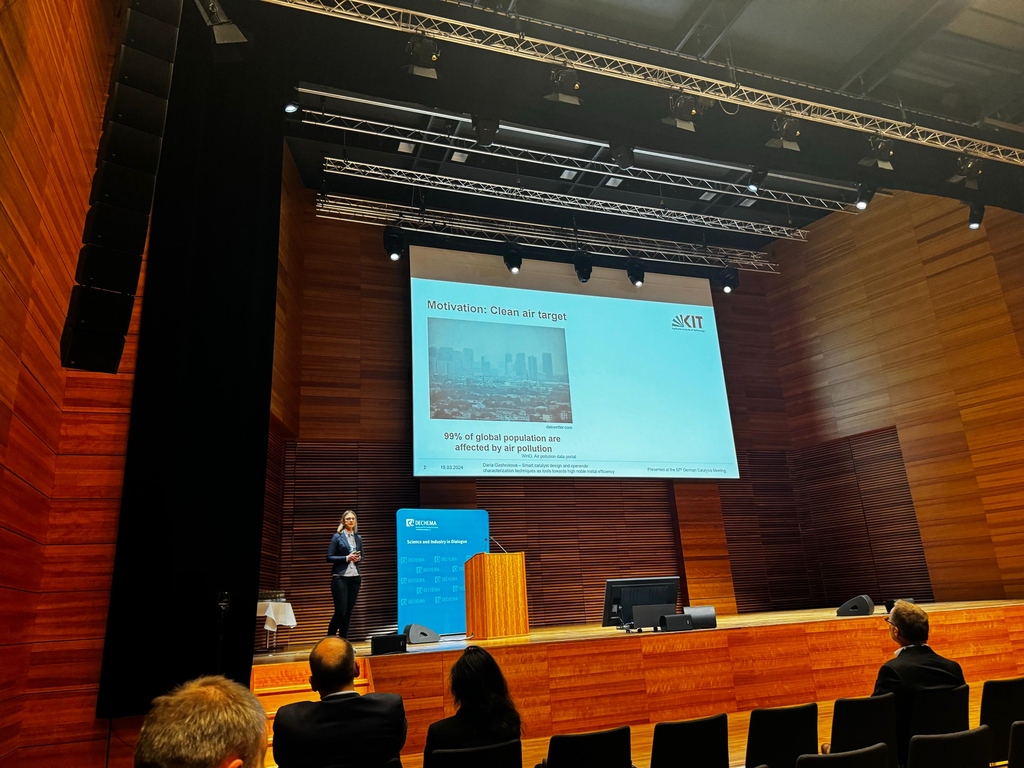
Several members of the Center for Emission Control Karlsruhe contributed to the 57. Jahrestreffen Deutscher Katalytiker in Weimar with posters and talks. In particular, Sofia Angeli gave a talk on “Towards digitalization of the microkinetic modeling workflow: Example NH3 decomposition” and Daria Gashnikova on “Smart catalyst design and operando characterization techniques as tools towards high noble metal efficiency”. March 2024.
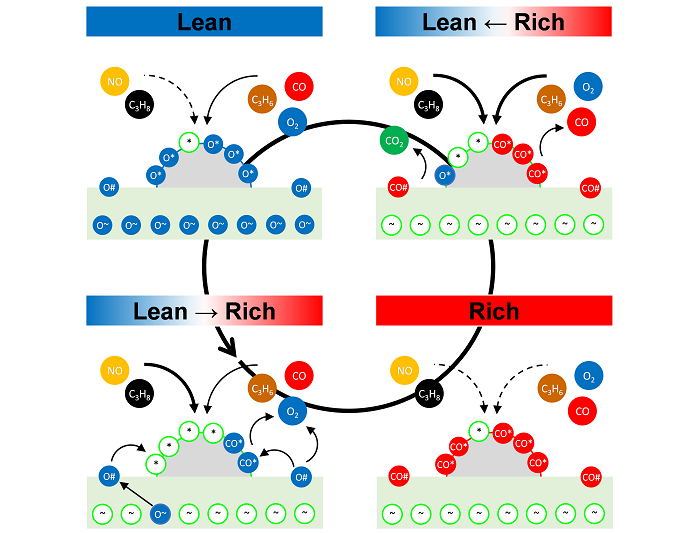
In collaboration with the Waseda University in Tokyo and Japanese automobile manufacturers, a new process has been developed to increase the efficiency of the three-way catalytic converter in a hybrid-electric vehicle at low exhaust temperatures. Inhibition of the catalytic converter by blocking the active sites at low temperatures can be prevented by periodic lean-rich switches of the exhaust gas. The work contributes to a better understanding of periodic processes in exhaust gas catalysis and has recently been published in Appl. Catal. B: Environ. January 2024.
Archive
2023
New review paper on the exhaust gas after-treatment of lean-burn natural gas engines
Several colleagues contributed to the new review article on the main challenges for the emission control of lean-burn engines, which was recently published in Appl. Catal. B. (Lott, Patrick, et al. "Exhaust gas after-treatment of lean-burn natural gas engines–from fundamentals to application." Applied Catalysis B: Environmental (2023): 123241.)
2022
New review paper on the Design and Operando Monitoring of Single-Atom Catalysts
The potential of operando X-ray techniques for following the structure and fate of the active species in single-atom catalysts is highlighted in the new review published by Bidyut Bikash Sarma et al. in Chemical Reviews. (Sarma, Bidyut Bikash, et al. "Design of single-atom catalysts and tracking their fate using operando and advanced X-ray spectroscopic tools." Chemical Reviews 123.1 (2022): 379-444.) November 2022.
New paper on the effect of NM concentration on ceria surface for in situ catalyst activation
In their recent paper in ASC Catalysis, Maurer et al. show that Pt diffusion barriers for cluster formation decrease with increasing the surface noble metal concentration SNMC on ceria, promoting more facile agglomeration of highly active metallic Pt particles. (Maurer, Florian, et al. "Surface noble metal concentration on ceria as a key descriptor for efficient catalytic CO oxidation." ACS Catalysis 12.4 (2022): 2473-2486.)
Update on MODEGAT
MODEGAT VII, the 7th International Symposium on Modeling of Exhaust-Gas After-Treatment took place in September 2022 in Bad Herrenalb/Karlsruhe, Germany. Special focus topics were (among other related topics): SCR of NOx, Three-Way Catalysts, Gasoline Particle Filters, Digitalization: Machine Learning and Control systems, Novel Power Trains: Hybrid vehicles, Fuel cells, Hydrogen fueled engines, and Emission control of non-mobile systems: Chemical, Steel and other industries. MODEGAT VIII is planned for September 21-23, 2025. More on modegat.org. December 2022.
The 27th North American Catalysis Society Meeting in May 2022
We will be at the 27th North American Catalysis Society Meeting in New York with a talk given by Kevin Keller on “Catalytic Total Oxidation of Methane – Towards a Better Understanding of the Water Inhibition Effect and the Influence of the Support Material”. We are looking forward to inspiring discussions. See you there! May 2022.
55. Jahrestreffen Deutscher Katalytiker in March 2022
We will be at the 55. Jahrestreffen Deutscher Katalytiker in Weimar with a talk given by Maria Casapu on “Noble metal particle size and support morphology effects on emission control by mono and bimetallic catalysts” as well as many interesting poster presentations. We are looking forward to inspiring discussions. See you there! March 20222.
2021
Save the new date: MODEGAT VII postponed until 2022
The next international symposium on Modeling of Exhaust-Gas After-Treatment (MODEGAT) will be held in 2022. The organizers believe that the interactive and collaborative spirit of MODEGAT is best created through face-to-face contact and have therefore decided against a virtual format. MODEGAT VII will take place September 11-13, 2022, in Bad Herrenalb/Karlsruhe, Germany. For updates regarding a call for abstracts, registration, and more visit the conference website www.modegat.org! January 2021.
2020
Excellence Award of the VAA Foundation for Patrick Lott
Deutschmann group Senior Scientist Dr. Patrick Lott received the Excellence Award of the VAA Foundation during a small, festive ceremony in Cologne. The prize, which is endowed with € 5,000, is awarded once a year in recognition of outstanding dissertations with industrial application relevance. December 2020.
How catalysts can work more efficiently
The DFG funds a new Collaborative Research Centre (CRC 1441) “Tracking the Active Site in Heterogeneous Catalysis for Emission Control” (TrackAct) for the understanding of catalytic processes. The vision of TrackAct is to design noble metal catalysts with atomic precision and to monitor and control the active site in the reactor and the technical application. December 2020.
Scholarship for Daria Gashnikova
Daria Gashnikova has received a Kékulé scholarship for her doctoral thesis. Congratulations! She will focus on a current topic in the field of emission control of stoichiometrically driven natural gas engines, with NOx reduction being the main focus of her scientific work. Prerequisite for the award of the scholarship from the German Chemical Industry Association is excellent academic performance achieved within the standard period of study. September 2020.
Start of a new semester
Due to the COVID-19 pandemic and the associated limited academic education operations, the new semester will start via the ILIAS learning management system. The following lectures will be offered digitally:
- Applied Chemistry and Chemische Technik III, coordinated by Olaf Deutschmann
- “Catalysis for sustainable chemicals and energies" and "Characterization in Materials Science and Catalysis", coordinated by Jan-Dierk Grunwaldt
- “Grundlagen der katalytischen Abgasnachbehandlung bei Verbrennungsmotoren“ , coordinated by Egbert Lox (Umicore), Jan-Dierk Grunwaldt and Olaf Deutschmann
The complete list of the lectures for the new semester is available here. Please register on the ILIAS platform during the next days if you want to participate or if you want to contribute. April 2020.
Project "AdBlue Deposits"
The FVV project „AdBlue Deposits“ (01/2017 - 04/2019) funded by the BMWi through the AiF investigated the interaction between injected AdBlue solution and the exhaust tract. A particular focus was on the resulting film formation and the compounds precipitating from the liquid film. In addition to experimental considerations, new models for urea decomposition, spray/wall interactions and heat transfer processes were investigated.
January 2020
2019
New catalyst test bench in construction
With the financial support from KIT we have recently started to build up a new catalyst test bench for measurements under rapid transient reaction conditions, i.e. gas mixture and temperature variations. The test bench will be used mainly for the different research projects on noble metal based catalysts within the TRACKACT Collaborative Research Center. November 2019.
2018
MODEGAT VI and ICOSCAR6 in 2019
The date for the next "International Symposium on Modeling of Exhaust-Gas After-Treatment" is set. MODEGAT VI will take place in Bad Herrenalb from 8-10 September 2019. Immediately following it, ICOSCAR6 (International Conference on Structured Catalysts and Reactors) will take place at the same venue until 13.9.2019. January 2018.
2017
Master thesis honored
Deniz Zengel received the Procter & Gamble Award for the best Master's thesis 2016/2017 in chemistry at KIT. In addition, he received a scholarship from the German Federal Foundation for the Environment (DBU) for his thesis "Investigation of the Potential of NOx Removal near Engines under Lean Conditions: An understanding-based evaluation of current catalyst systems under realistic conditions". November 2017.
Following in the footsteps of Center for Emission Control Karlsruhe team member Patrick Lott, Florian Maurer from the German Chemical Industry Association has now also been awarded the Chemiefonds-Stipendium Scholarship for doctoral students. One of the prerequisites for the scholarship is a speedy course of study with excellent academic performance. September 2017.
New catalyst concept developed
The study Tuning the Structure of Platinum Particles on Ceria In Situ for Enhancing the Catalytic Performance of Exhaust Gas Catalysts by A. M. Gänzler, M. Casapu et al., published in Angewandte Chemie, presents a new catalyst concept. In the study, the size and state of the precious metal nanoparticles on the catalyst surface can be adjusted to react to external influences such as the exhaust gas composition in order to achieve an optimal result. In the future, exhaust gases could be efficiently treated and precious metals could be saved even during cold starts of engines and in city traffic. Press release KIT 151/2017. September 2017.
Awarded article in Catalys Science and Technology
The article Transient structural and catalytic behaviour of Pt-particles probed by operando spectroscopy during a realistic driving cycle by F. Benzi, T. Sheppard et al., which was mainly prepared at the Karlsruhe Exhaust Gas Center, was selected as a cover topic in the Catalysis Science and Technology issue 2017,7. In addition, he has been awarded by inclusion in the 2017 Catalysis Science and Technology Hot Articles collection. July 2017.
MODEGAT V
MODEGAT V (5th International Symposium on Modeling of Exhaust-Gas After-Treatment) took place from September 3-5, 2017 in Bad Herrenalb. The concept of the symposium, which focuses on personal exchange between participants from industry and scientific institutions, was once again very well received by all participants. The next MODEGAT is already being planned. September 2017.
2015
MODEGAT IV
The Center for Emission Control Karlsruhe is a strong partner atMODEGAT IV (4th International Symposium on Modeling of Exhaust-Gas After-Treatment), both organizationally and with scientific contributions. September 2015.
2014
Diploma theses honored
Dipl.-Chem. Paul Sprenger and Dipl.-Chem. Andreas Gremminger, both PhD students in the working groups of Prof. Grunwaldt and Prof. Deutschmann at the Institute of Technical Chemistry and Polymer Chemistry, were awarded the Hans-Dinger-Prize of the Research Association for Internal Combustion Engines for their diploma theses. Press release. September 2014.
2013
MODEGAT III
The Center for Emission Control Karlsruhe is actively involved in the organization and scientific contributions to MODEGAT III (3rd International Symposium on Modelling of Exhaust-Gas After-Treatment). We are very pleased about the successful conference. September 2013.