

Synthesis 1: Basic Chemistry used

The most used monomer is acrylic acid (AAc) that offers the possibility to influence the charge density via pH. The other important parameter of influence is the degree of crosslinking or the average length of the chains between two crossing points. Also of importance, but not easy to control, is the homogenity of the network and the existence of free dangling ends.
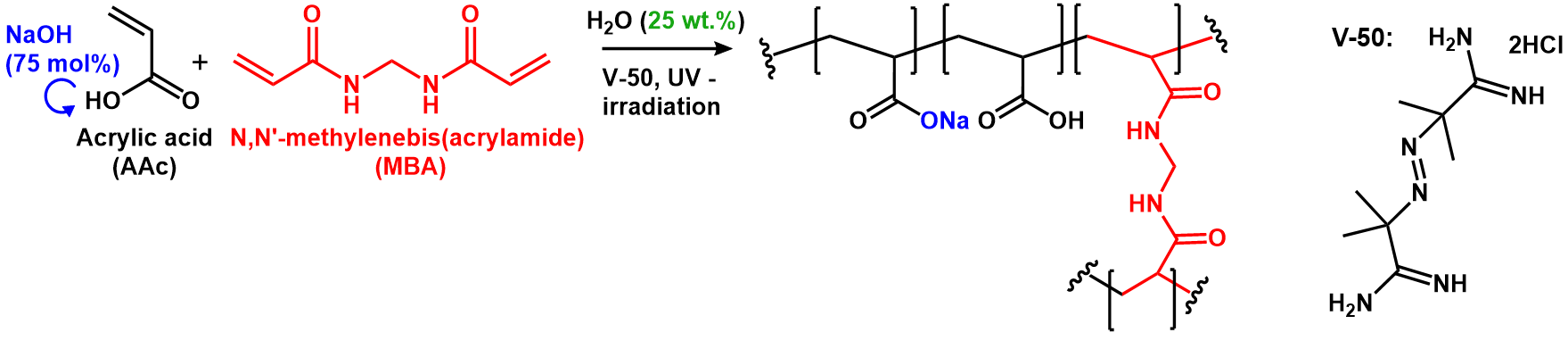
A typical reaction scheme for polyacrylic acid
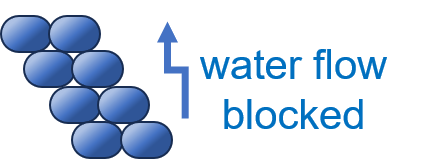
One important problem in applications in the general is the so called "gel-blocking". If the network flexibility ist not high enough, only the outer parts of the gel will swell and then block the inner region resulting in a drastical decreasesd swelling range or at least in an increased swelling time.
This Problem is more pronounced for bigger gel particles and for particles under stress because then the voids between the single particles can be blocked by deformation.
Therefore it is of highest importance for the application in an osmosis engine where we want fasst swelling times and high degrees of swelling, all under mechanical load.
To avoid these problem, we use specialized synthesis techniques, microfluidic and 3D-Printing, described in the further tabs of this page.
Why microfluidic synthesis for hydrogels?
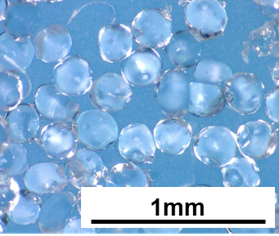
- Form regular spherical particles to maintain internal voids in the packed hydrogel
- Control sizes to reduce liquid diffusion path resulting in a faster swelling and deswelling
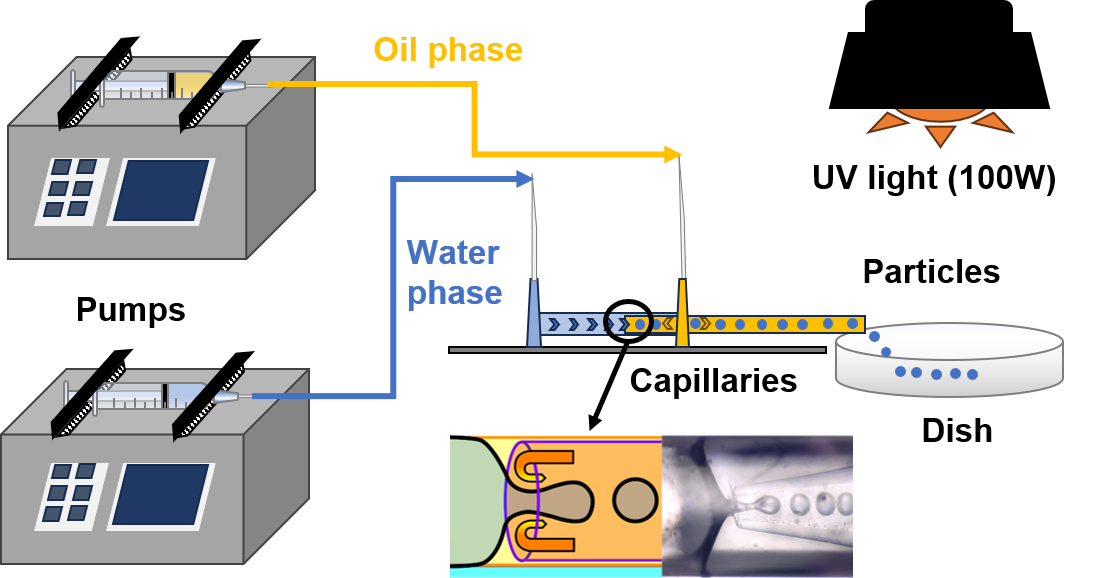
The system utilizes a self-made flow-focusing glass capillary microfluidic device. During the operation water phase containing reaction solution and oil phase are pumped into the capillaries and droplets of the water phase are formed at the intersection by the flow focusing of the oil phase.The flow rates of the oil and water phases and diameters of the capillaries determine the sizes of resulting particles. On the left, you can take a look at the schematic experimental construction and you can see an example with an average diameter of 233 µm.
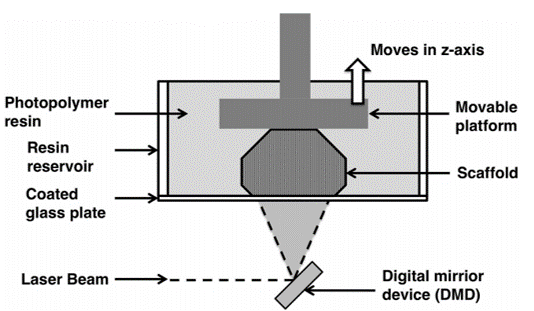
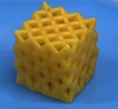
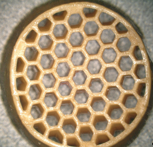
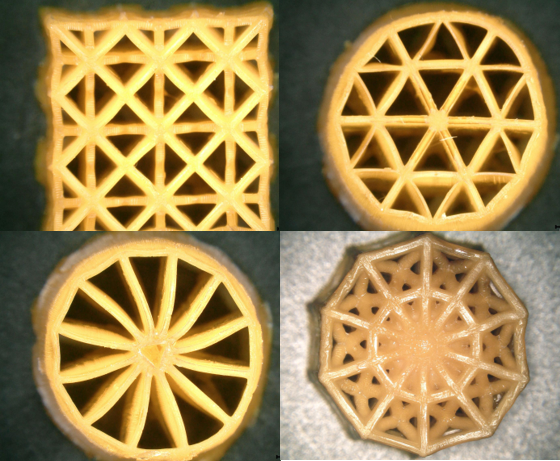
With this technique, you produces particles of typically 20 mm, in the height this is the maximum dimension. In spite of the overall size, the shape is totally flexible so one has still control about swelling times due to small material thickness, the problem ogf gelblocking can be avoide even better than with the microfluidic synthesis. Goal is the perfect Structure design to achieve instant expansion while maintain mechanical strength.
The 3D-Printing is a layered method with roughly 200µm layer thickness and 5s exposure time per layer resulting in a quite fast method for hydrogels in complicated shapes. Smaller time leads to unfinished polymerization and unprinted structures while too much time leads to rigidity and possible blockage. Size and shape of the particles can be adapted to the specific problem, possible shapes we already printed you can see below.